Building a specialty
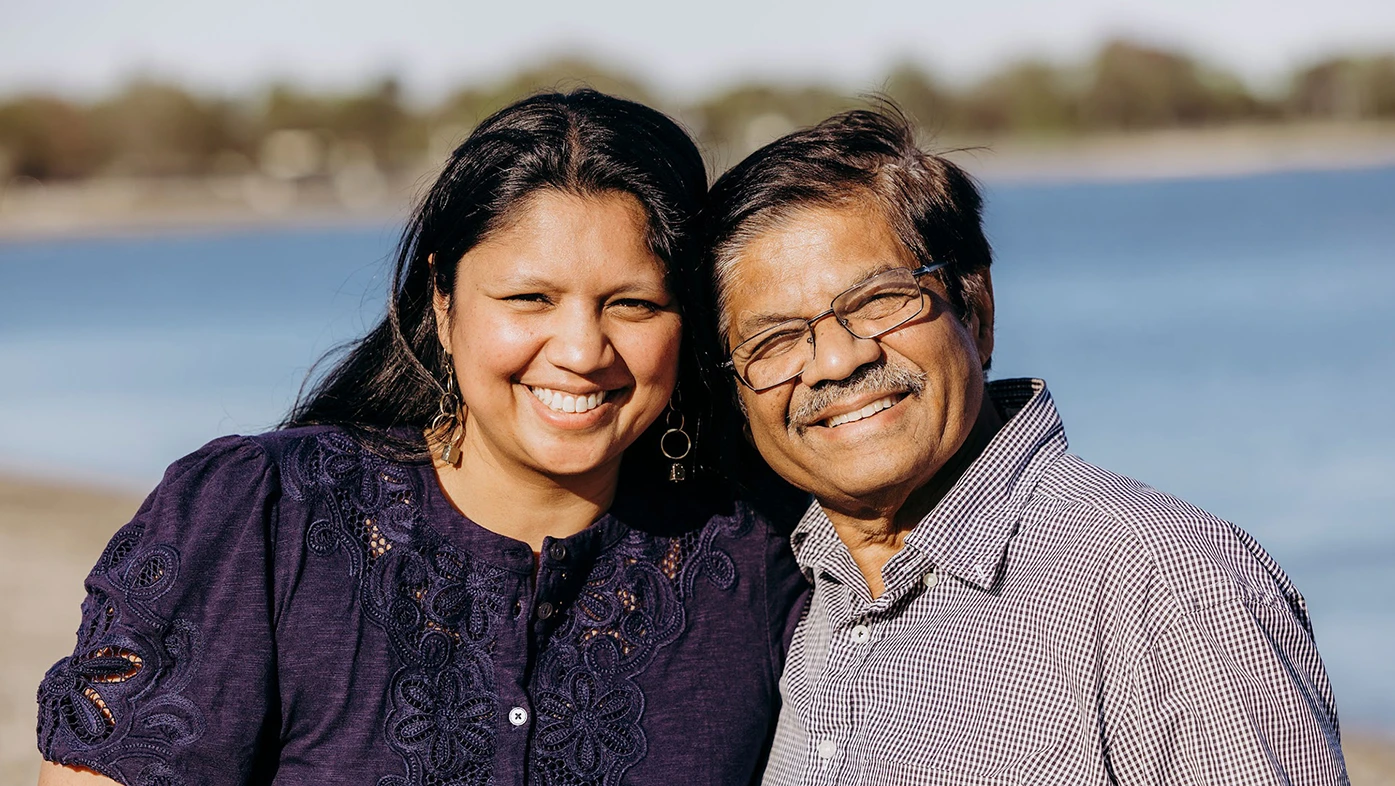
Ramachandran’s internships at BMS and medical education solidified her interest in a career combining research and treatment, eventually leading her to focus on the impact of autoimmune connective tissue diseases like lupus on hair, skin and nails. As an associate professor at Yale, she operates a multidisciplinary clinic and sees patients together with a rheumatologist. “A lot of patients need more information because these are very complicated diseases, so having two physicians with different specialties can really help to put together the pieces of what's going on,” she said. Despite Ramachandran’s extraordinary efforts, she found there were still barriers to understanding the best course of treatment for patients of color, who are disproportionately impacted by diseases like lupus: “Unfortunately, clinical trials don't always include those who are most affected by the disease." Ramachandran resolved to change that.
Advancing equity through research
In 2022, Ramachandran was awarded funding through the Robert A. Winn Excellence in Clinical Trials Award Program (Winn Awards) to study the safety and effectiveness of a potential new lupus treatment in medically underserved populations. The Winn Awards were established in 2020 with a $100 million commitment by the Bristol Myers Squibb Foundation, an independent charitable organization. Ramachandran’s research is ongoing, but she is optimistic about the impact. “New treatment options offer patients the hope to live their lives to the fullest,” she said.
Reflecting back on her family’s history with BMS and the BMS Foundation, she grew contemplative: “There are a lot of people working on a lot of different things in order to make a big difference in people's lives. At the core of all of science and medicine, is hope. Hope for ourselves, hope for our patients. I always feel hopeful.”