


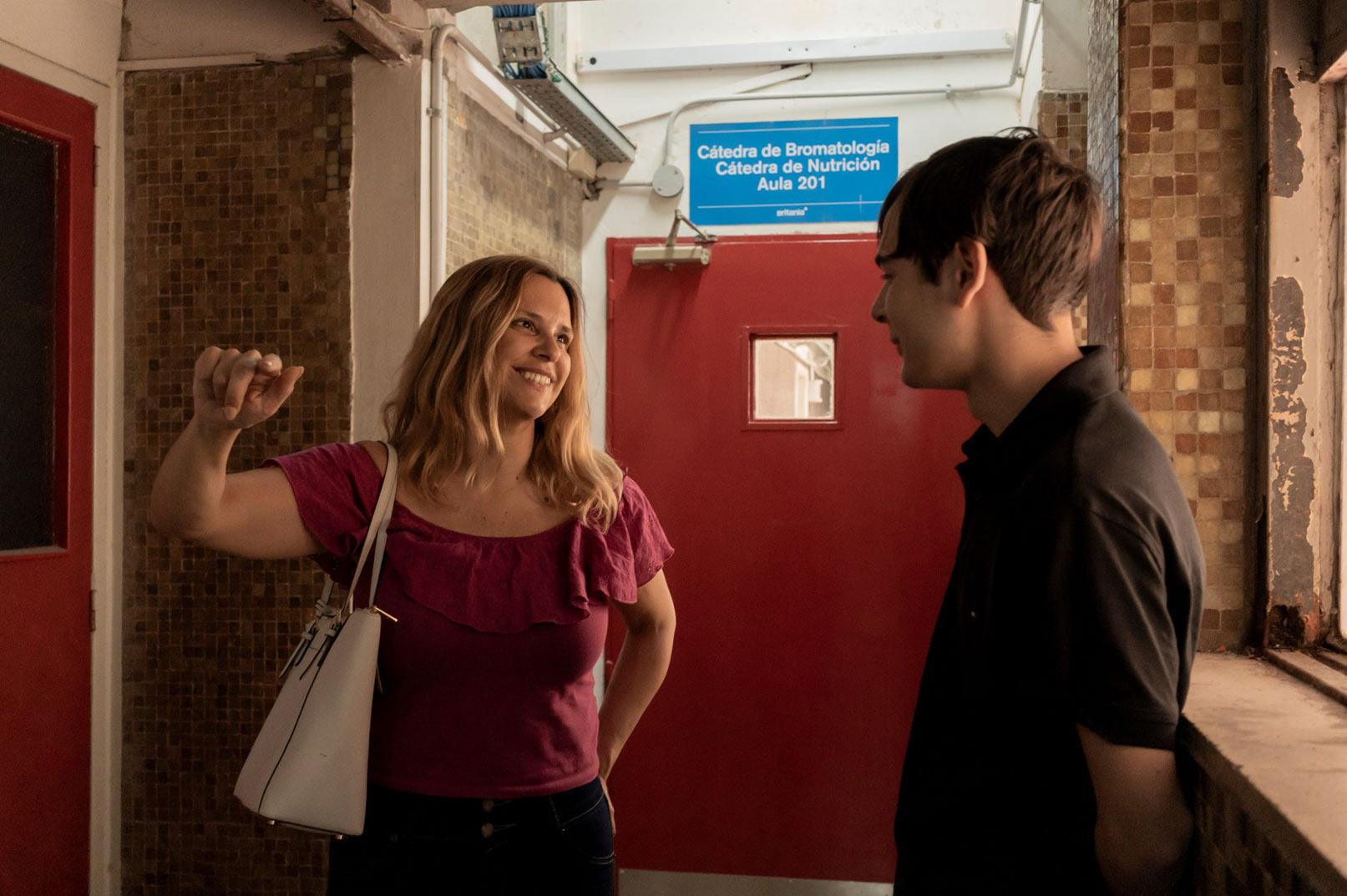
Decades later, Zubiri and her son tour the pharmacy and biochemistry faculty building where she spent six years studying for her degree and started her research career.
‘It’s not a choice you have to make’
Now a seasoned professional, Zubiri wants to be there for women earlier on in their careers. From 2020 to 2022, she was co-lead of the Argentina chapter of B-NOW.
“It was difficult for me, my first years being a mother and having a career also,” she said. “We’re in a much better position now than 20 years ago, but we have to keep working to tell women, ‘It’s not a choice you have to make: to be a mother or to have a career,’” she said. “You can do both.”
Always the data analyst, Zubiri studied metrics around gender equity not only at BMS, but across the industry and her region. She could see, in the data, how BMS was a top workplace for women, and how the options for working moms have continued to grow: parental leave, childcare support, flexibility to work from home.
As for Argentina, it has been a leader on several fronts. It was the first country in Latin America and the Caribbean to incorporate gender equality into its national science, technology, and innovation (STI) plan. It was also the first — almost a decade ahead of its peers — to create a national network of women researchers.
That was in 1994, just as Zubiri was getting ready for university, to fulfill her mom’s dream, to fulfill her own dream, and become one of those researchers herself.
Read more from this series on BMS women in STEM around the world.
