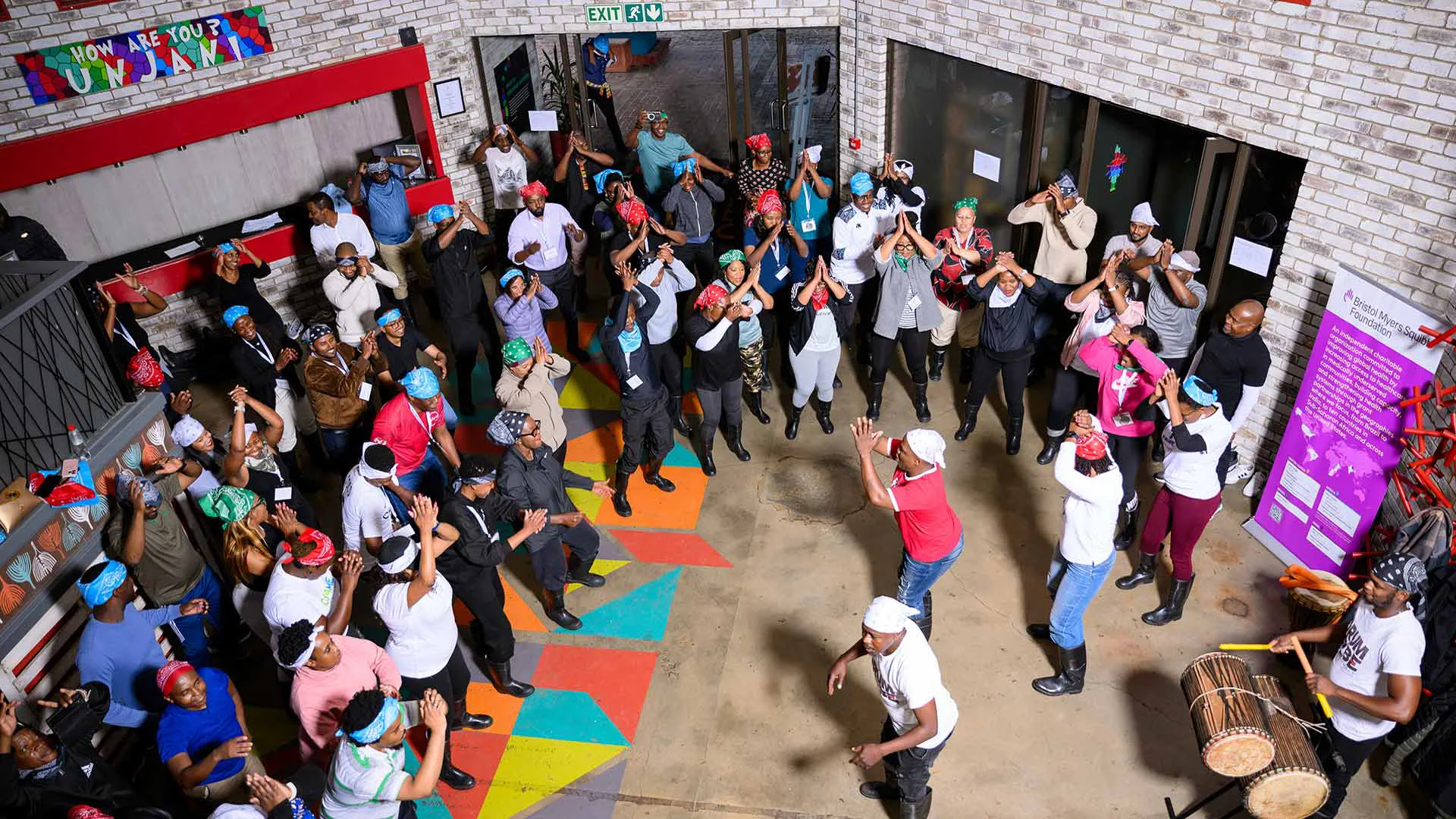
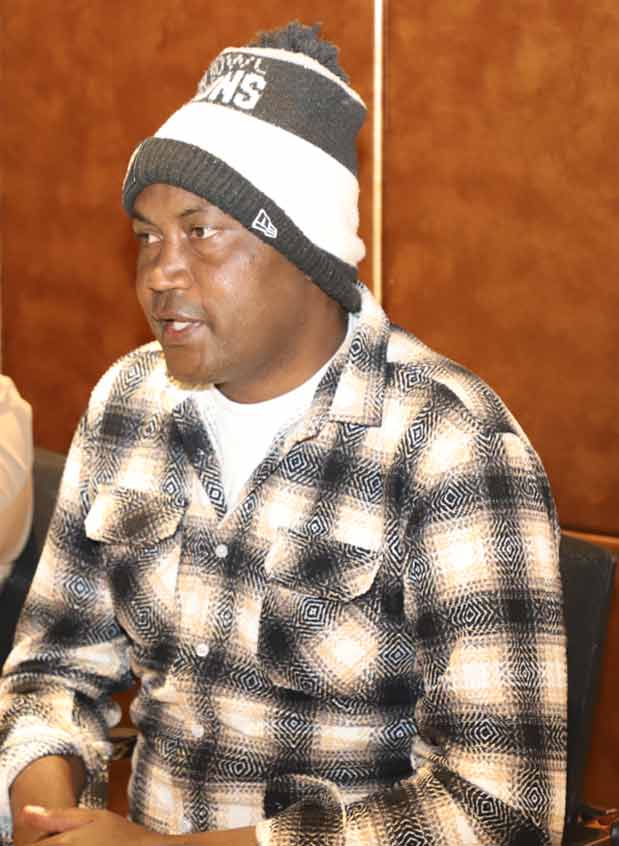
For many cancer patients throughout Africa, the journey to diagnosis and treatment can be long and uncertain. But across the continent, communities and local leaders are working to change that reality. The Bristol Myers Squibb Foundation (BMS Foundation), an independent charitable organization, is proud to support many of these changemakers by strengthening cancer care systems and improving access to quality care, closer to home.
Recently, BMS Foundation President Catharine Grimes and members of the BMS Foundation team traveled to Africa to witness firsthand the impactful work of their grantee partners and meet with patients in various communities. The trip highlighted the profound impact of local efforts to transform health outcomes, and the unwavering commitment of the people working tirelessly to improve and save lives.
Their journey began in Kitui County, Kenya, where cervical and breast cancer are the leading causes of death among women of reproductive age, and access to treatment locally was once virtually unattainable. For years, patients had to travel over 150 miles to Nairobi for specialty care, often sleeping in hospital corridors. But today, the Phangisile Mtshali Cancer Center stands as a beacon of hope. Established in partnership with the Centre for Medical Mobilisation Board (CMMB) and the Kitui County Ministry of Health, the center has served more than 600 new patients and recorded over 5,400 revisits in just two years. It has also served as a hub for coordinating life-saving public health interventions, including reaching over 36,500 girls aged 10–14 with the HPV vaccine as a critical step toward advancing the WHO’s 90-70-90 cervical cancer elimination strategy.
“The Phangisile Mtshali Cancer Center has become a lifeline for cancer patients in Kitui county,” said Grimes. “Survivors bravely shared their stories with us, and they spoke with deep gratitude for this center that has changed their lives. It reaffirmed for us that when care is close to home, everything changes — outcomes, trust and lives. That is the power of building strong local systems that are responsive to the needs of the community.”
The BMS Foundation next traveled to Kisumu County, joining grantee partner Cure Cervical Cancer Kenya’s Mobile Health for Mamas program. Their community health campaign model uses home-based human papillomavirus (HPV) self-sampling, mobile treatment outreaches where eligible HPV-positive women who receive same-day diagnosis are invited for visual inspection with acetic acid (VIA) and are offered free thermal ablation treatment and patient navigation services.
“This initiative is grassroots public health at its finest,” Grimes shared. “Women from remote areas are able to access critical screening and treatment, and they are cared for with compassion and respect. The commitment of these health workers is nothing short of inspiring.”
Since 2021, the program has screened over 47,000 women for HPV and treated more than 8,000 HPV-positive patients in Kenya.
That same commitment to community-led, patient-centered care was on full display as the Foundation team continued on to other grantee sites. In Durban, South Africa, they participated in the Cancer & Infectious Diseases Epidemiology Research Unit-University of KwaZulu Natal’s (CIDERU-UKZN) mobile X-ray outreach in one of the implementing sites, which was made possible in collaboration with other CIDERU-UKZN partners, showcasing the power of inclusive interventions at the community level. They also toured the newly renovated lung cancer unit at Addington Hospital, which is focused on reducing the proportion of patients being diagnosed with lung cancer in stages 3 & 4 and increasing the volume of patients being diagnosed at earlier stages (1 & 2), ultimately saving lives.
And at the CANSA Mkhuhla Care Home, they met patients who received housing, meals, counseling and a supportive community after traveling long distances for treatment.
In Eldoret, Kenya, at the Moi Teaching and Referral Hospital (MTRH), in Uasin-Gishu County, the team made a visit to one of the facilities, Kamalel Health Centre in Kesses Sub-County. They witnessed local efforts to build community awareness, improve early detection and connect patients to treatment through navigation and peer support.