Disease state resources
Multiple myeloma fact sheet
Home / News and media / Media library / Disease state resources / Multiple myeloma at a glance

November 28, 2018      Updated: May 27, 2025

Multiple myeloma is a blood cancer formed by malignant plasma cells and typically originates in the bone marrow. 
 

What is multiple myeloma? 


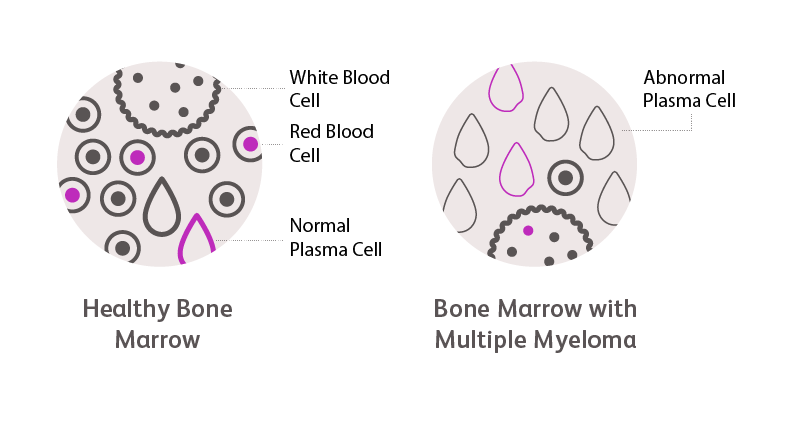
Normal plasma cells are found in the bone marrow and are an important part of the immune system. Through a complex, multi-step process, healthy plasma cells can transform into malignant myeloma cells.


Myeloma cells then reproduce and accumulate in the bone marrow, crowding out other important blood cells. Additionally, these myeloma cells produce an abnormal protein, known as M protein.
A high level of M protein in the blood is the hallmark characteristic of multiple myeloma. 
 

Healthy bone marrow

Multiple myeloma typically occurs in bone marrow in the spine, pelvic bones, ribs and areas of the shoulders and hips.

Multiple myeloma
Map

292,000
new cases of multiple myeloma are expected to occur globally from 2022 to 2040

Risk factors

The cause of multiple myeloma is not known but it may be more common in:

Weight

People with excess body weight

People

People with a sibling or parent who has had multiple myeloma

Plasma cell disease

People with other plasma cell diseases

Males
Males
Old age
People 65+
Most people diagnosed are at
least 65 years old

2x
African Americans
Multiple myeloma is more than twice as common in African Americans than in white Americans

Signs & symptoms

Some people with multiple myeloma have no signs or symptoms at all, but symptoms of multiple myeloma may include: 
 

Bone broken

Bone Pain or Bone Fractures

Weakness

Weakness

Infections

Infections

Thirst

Increased Thirst

Weight loss

Loss of appetite and weight loss

Nerve damage

Nerve Damage

Impaired kidney function

Impaired Kidney Function

Treatment options


A patient’s treatment options depend on the stage of their multiple myeloma, but may include:

Drug

Drug therapy

Radiation

Radiation

Immunotherapy

Immunotherapy

CarT

CAR T cell therapy

Stem cells

Stem cell transplant

Surgery

Surgery

Bone

Bisphosphonates

Plasmapheresis

Plasmapheresis 

And more treatment options are being studied.


© 2025 Bristol Myers Squibb. All rights reserved. 4/25. HE-US-2500193