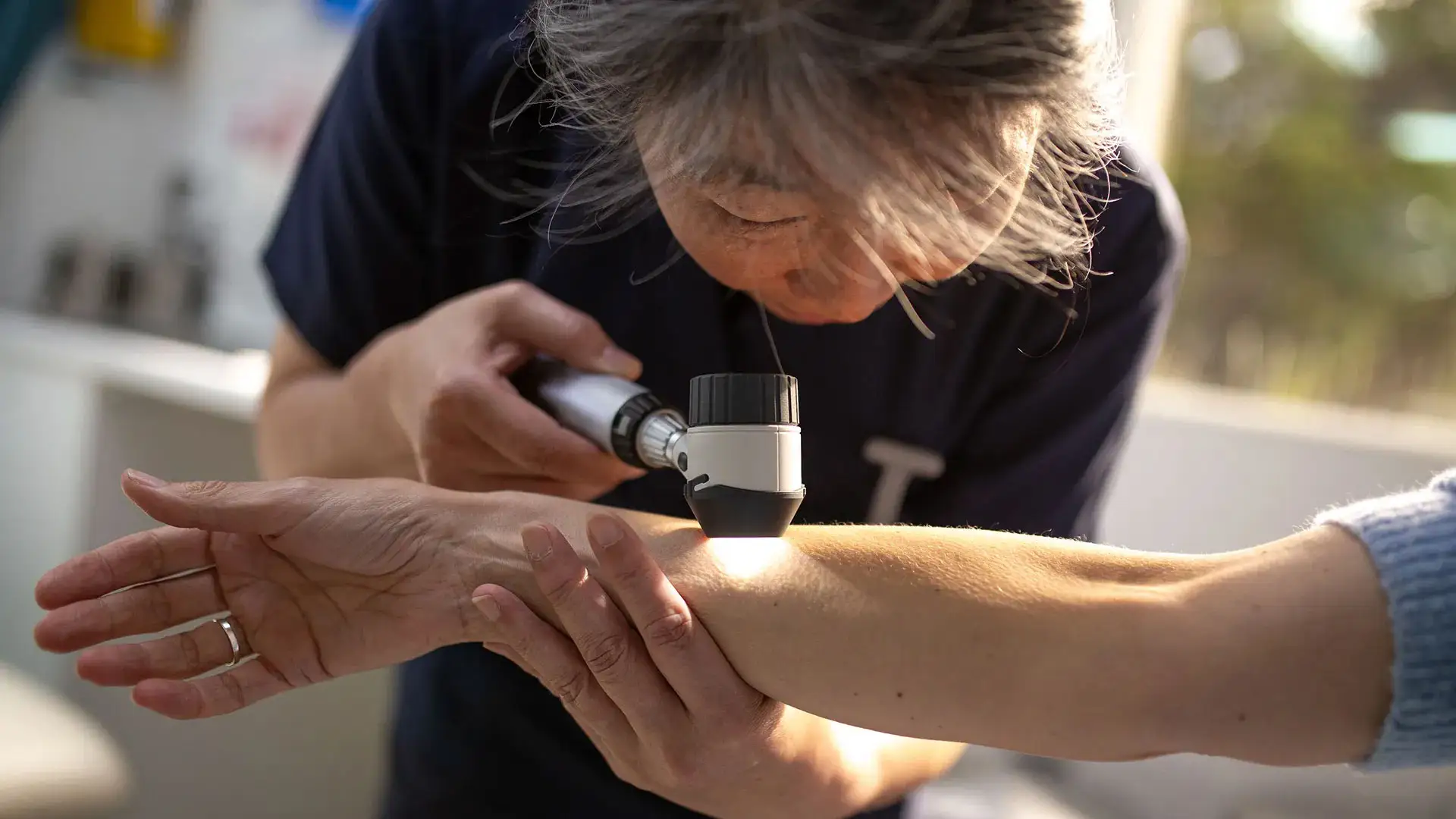
May marks Melanoma Awareness Month. As more people head outside to enjoy the summer sun, it’s a vital opportunity to address the escalating global challenge of the most serious form of skin cancer. At Bristol Myers Squibb, we’re dedicated to advancing scientific breakthroughs in melanoma care, but true progress stems from both clinical understanding and lived experience.
This month, we unite two compelling perspectives to illuminate the realities of melanoma: Monica Shaw, MD, senior vice president of Oncology Commercialization at Bristol Myers Squibb, who shares vital insights into early detection and evolving treatments from her experience as a practicing dermatologist, and Mary Elizabeth Williams, a melanoma patient and clinical trial participant, whose personal journey underscores the critical importance of proactive measures and empowered patient advocacy.
The global challenge of melanoma: Understanding the risks
Melanoma presents a significant public health challenge, with its incidence rates more than doubling since 1980. Based on 2024 World Health Organization estimates, 331,722 new melanoma cases are diagnosed globally each year. This staggering statistic is a reminder of the importance of understanding individual risk factors and the power of vigilance.
"As a dermatologist, I've seen firsthand how crucial early detection is," says Dr. Monica Shaw. "Periodic skin examinations, both self-checks and annual dermatologist visits, are vital. If an area of concern is found on the skin (i.e., something new or changing on the body), consulting a dermatologist as soon as possible is always the best course of action. Family history also significantly increases risk, with approximately 1 in 10 people with melanoma having a family history of the disease."
Other risk factors include having many moles and significant UV ray exposure. While the average age at diagnosis is 66, per SEER 2018-2022 data, melanoma affects individuals across a wide spectrum of ages. Melanoma is one of the most common forms of cancer in people younger than 30. This reality underscores the critical need for broad awareness.
"My own melanoma journey began subtly, with a small scab on my scalp that I barely noticed until I felt a bump while washing my hair. I couldn’t see anything, I didn’t feel any pain, but I went to my dermatologist out of caution," Ms. Williams recounts. "She told me that it looked like skin cancer, but I found myself thinking, ‘That’s no big deal’. Until a week later, when my phone rang and my dermatologist said the two words you never want to hear a doctor say: ‘I’m sorry’. That shifted my entire world.”
A patient's enduring journey: Navigating recurrence and reality
The impact of early diagnosis on melanoma outcomes cannot be overstated, but it’s just as critical to be vigilant, as cancer can return at any point.
“I had surgery a few days after receiving my initial diagnosis. I recovered and took great pride in it,” says Ms. Williams. “After some time, I received the devastating news of a Stage IV recurrence. It was a profound moment, and honestly, I felt like a fraud. Society often expects a 'warrior' mentality, an enforced positivity that can be isolating, when the reality is fear and vulnerability."
Her journey highlights the stark realities of melanoma recurrence. In a real-world analysis of U.S. community oncology patients, within five years after surgery, 37.3% of patients with Stage IIB melanoma and 43.2% of patients with Stage IIC melanoma see their cancer return.
Furthermore, based on U.S. SEER data (2015-2021), five-year relative survival rates are significantly higher for localized melanoma (>99%), meaning the cancer cells are confined, compared to regional melanoma (75.7%), where the cancer has spread to lymph nodes, or distant melanoma (34.6%), where it has spread to major organs. It’s important to know that these survival rates are based on population-level data and may not reflect individual outcomes, which can vary based on disease characteristics and advances in treatment.
Advancing melanoma treatment: A future of hope
The landscape of melanoma treatment is continually evolving, continuing to offer more options for patients. Current approaches encompass a range of strategies, often used in combination, including:*
- Immunotherapy to assist the body’s immune system in targeting cancer cells
- Surgery to remove cancerous tissue
- Chemotherapy to destroy cancer cells
- Radiation therapy to target and shrink tumors
- Targeted drug therapy which focuses on specific cancer cell characteristics
"As a scientific community, the progress we've made across treatment options offers possibilities that didn't exist not long ago," Dr. Shaw notes. "Our focus at Bristol Myers Squibb remains steadfast on bringing innovative treatments to patients, working towards scientific breakthroughs that may bring new hope for patients. But none of this works without patients feeling empowered to engage, ask questions and be active participants in their care."
Ms. Williams’ personal experience resonates deeply with this commitment: “Curiosity, for me, was a luxury I fought for, and it empowered me to make informed decisions about my care, including participating in a clinical trial when options were scarce. Trials may not be an option for all patients, but through that trial, I met incredible people along the way, and I learned to appreciate the everyday moments. The joy of a good yogurt, the feeling of feet on the sidewalk and going to the park with my daughters are the moments that cancer can threaten. These are the moments that make every advancement, every clinical trial, every dedicated person in healthcare, so profoundly important."
Your truth, your action
As Melanoma Awareness Month 2026 unfolds, the collective message is clear: understanding and acting on the truths about melanoma can save lives. Whether through the scientific rigor driving new treatments or the human stories of those impacted by this disease, every step forward counts. It is in this spirit of collective progress that Bristol Myers Squibb remains dedicated to advancing the science to better understand melanoma and explore new approaches for treatment.
We encourage everyone to learn the risk factors, practice sun safety, perform regular self-skin checks, consult a dermatologist if you notice anything concerning and encourage your friends and families to do likewise. May is brief, but practicing melanoma awareness every day can help you enjoy healthier summers and all seasons.
Learn more about melanoma here
*Treatment experiences, options and responses may vary between individuals